How Sanitization and Disinfection Services Help Protect Your Tulsa Workplace
A clean workplace does more than improve appearances. It can help employees feel more comfortable, create a positive impression on customers, and support the daily operation of your business. Routine dusting, vacuuming, and surface cleaning are important, but some facilities also need targeted sanitization and disinfection services.
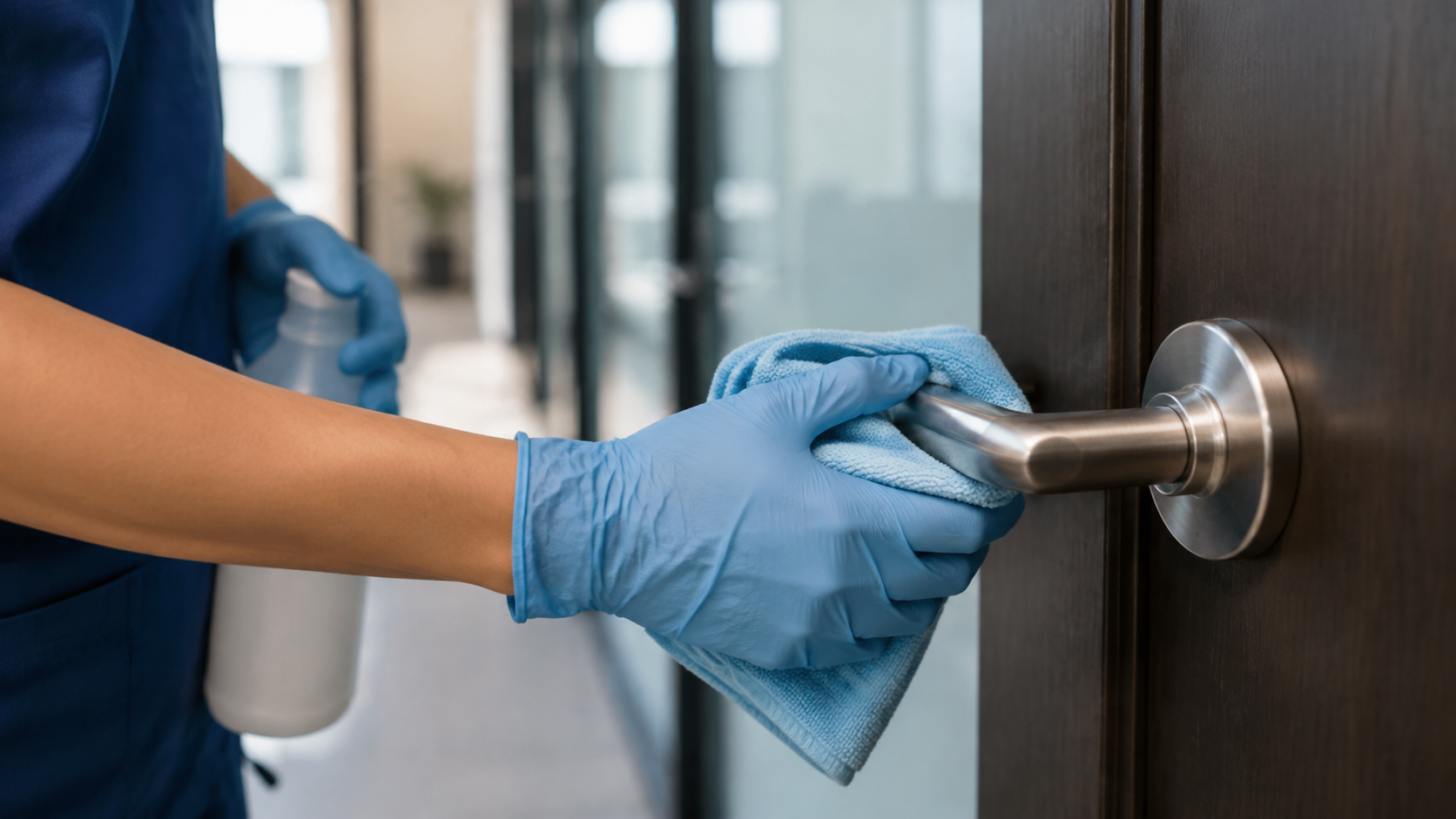
Shared workplaces contain many surfaces that are touched throughout the day. Door handles, light switches, elevator buttons, breakroom counters, restroom fixtures, desks, and shared equipment can quickly collect dirt and germs. A professional sanitization and disinfection plan gives these areas the focused attention they need.
Custom Cleaning Group provides professional commercial cleaning solutions for businesses in Tulsa. With more than 50 years of cleaning industry experience, the team understands that every workplace has different traffic levels, schedules, surfaces, and cleaning priorities.
Cleaning, Sanitizing, and Disinfecting Are Different Processes
Cleaning, sanitizing, and disinfecting are often treated as interchangeable terms, but they serve different purposes.
According to the Centers for Disease Control and Prevention, cleaning removes dirt, impurities, and many germs from surfaces. Sanitizing reduces the germs that remain after cleaning, while disinfecting uses appropriate products to kill harmful germs left on a surface.
Cleaning Removes Dirt and Buildup
Cleaning is the first step. It removes dust, spills, grease, food residue, and other visible buildup from a surface. This usually involves water, detergent, and physical action such as wiping or scrubbing.
Cleaning a surface first is important because dirt and residue can interfere with the effectiveness of sanitizers and disinfectants. Applying a disinfectant directly to a visibly dirty surface may not provide the intended result.
Sanitizing Reduces Germ Levels
Sanitization lowers the number of germs on a cleaned surface to levels considered acceptable under applicable public health standards. It is commonly used in areas where routine hygiene is a priority, including breakrooms, shared work areas, counters, tables, and certain food-contact surfaces.
The right process and product depend on the surface, how the area is used, and any industry-specific requirements.
Disinfecting Targets Remaining Germs
Disinfection goes a step further by using a suitable chemical product to kill germs that remain after cleaning. It may be recommended for high-touch surfaces, restrooms, shared equipment, or areas affected by illness.
The product must be appropriate for the surface and used according to its label. The Environmental Protection Agency explains that disinfectants require a specific contact time. This means the surface must remain wet for the amount of time listed on the product label to work properly.
Why Workplace Sanitization Deserves Attention
A workplace can look clean while still having frequently touched areas that require additional care. Employees, customers, vendors, and visitors may interact with the same surfaces throughout the day.
Professional sanitization and disinfection services help businesses address these areas through an organized process instead of relying only on occasional spot cleaning.
Support a More Comfortable Work Environment
Employees notice the condition of their surroundings. Clean desks, fresh-smelling common areas, well-maintained restrooms, and visibly cared-for surfaces can make a workplace feel more comfortable and professional.
A consistent cleaning and disinfection schedule can also reassure employees that management takes workplace cleanliness seriously.
Make a Better Impression on Visitors
Customers often form an impression of a business before speaking with a staff member. Smudged entrance doors, dusty counters, untidy waiting areas, or poorly maintained restrooms can affect how they view the company.
Clean, well-kept spaces communicate care and attention to detail. This matters in offices, retail stores, commercial buildings, and other customer-facing facilities.
Give High-Touch Surfaces Consistent Care
Some areas require more frequent attention because many people touch them. Common examples include:
Entrance and restroom door handles
Light switches and elevator buttons
Reception counters and shared desks
Phones, keyboards, and touchscreens
Stair rails and cabinet handles
Breakroom tables and appliance handles
Faucets, dispensers, and restroom fixtures
Shared tools and workplace equipment
The frequency of service should reflect how many people use the facility and how often those surfaces are touched.
What Professional Sanitization and Disinfection Services May Include
A professional service should be planned around the actual needs of the property. An office with a small staff may require a different approach than a busy commercial building with constant visitor traffic.
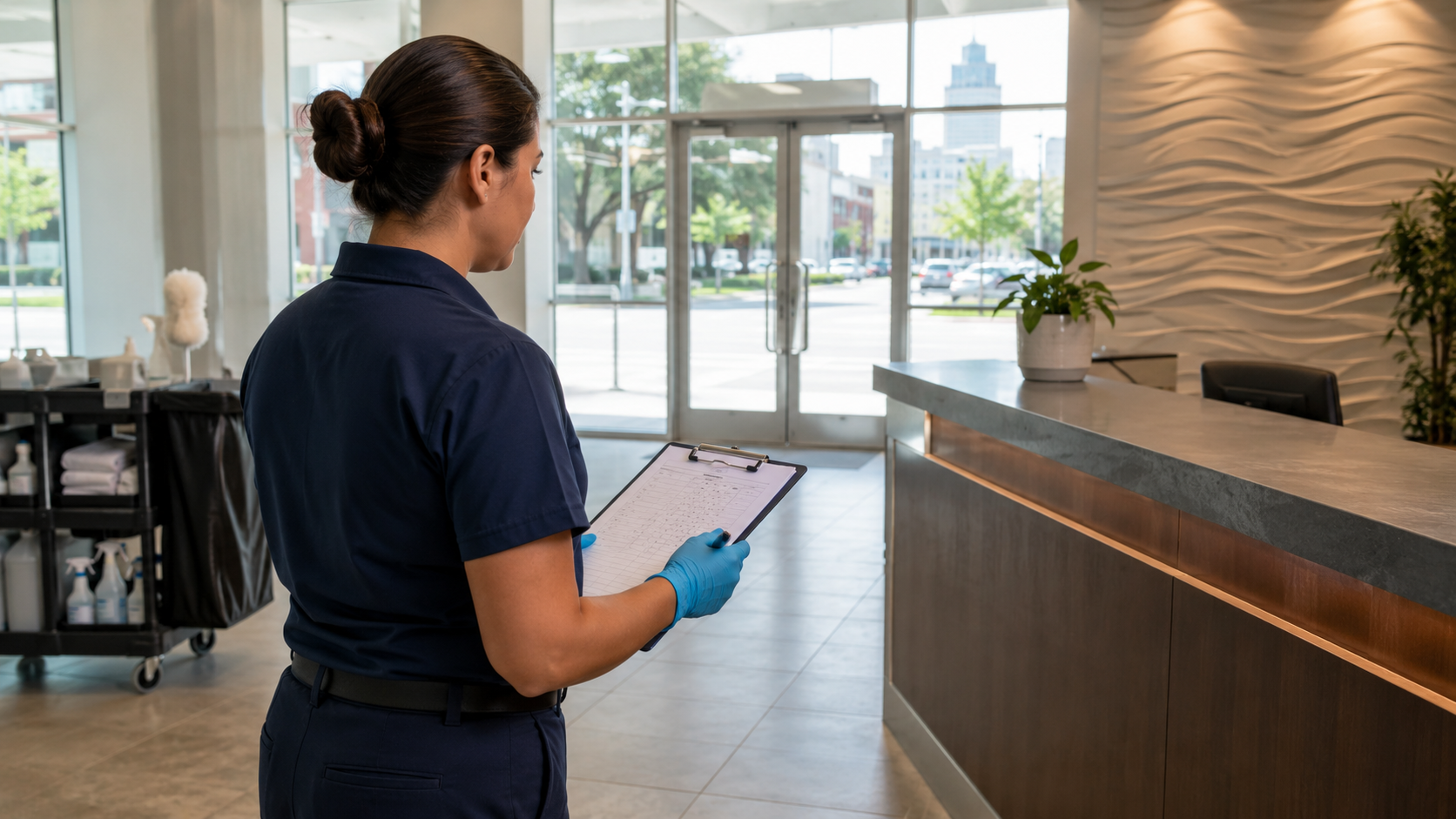
The process typically begins with an assessment of the facility. This helps identify high-traffic areas, frequently touched surfaces, special materials, and spaces that need focused attention.
Service may include:
- Cleaning surfaces before sanitizing or disinfecting
- Treating commonly touched fixtures and access points
- Sanitizing shared workspaces and breakroom surfaces
- Disinfecting restroom fixtures and other priority areas
- Using products that are suitable for the intended surfaces
- Following product instructions, including required contact times
- Coordinating service around the business’s operating hours
- Providing routine or one-time cleaning based on the situation
Not every surface requires the same product or treatment. Electronics, finished wood, natural stone, fabrics, and food-contact surfaces may have different care requirements. An experienced commercial cleaning team can select an appropriate method for each area.
When Should a Business Schedule Disinfection Services?
The right schedule depends on the property, number of occupants, customer traffic, and type of work performed. Some businesses include sanitization in their regular commercial cleaning plan, while others request additional service when a specific need arises.
During Cold and Flu Season
Workplaces may experience more employee absences during seasons when respiratory illnesses are common. Increasing attention to high-touch surfaces can support the company’s broader workplace hygiene practices.
Surface disinfection should complement, not replace, policies that encourage handwashing, responsible sick leave, and good respiratory hygiene.
After a Reported Illness
If someone who has recently been in the building reports an infectious illness, certain areas may require focused cleaning and disinfection. The affected spaces, timing, and appropriate products should be considered carefully.
Businesses should follow current public health guidance and any requirements that apply to their industry.
Before or After a Large Event
Meetings, conferences, open houses, and company events can bring more people into a facility than usual. Scheduling service before an event creates a polished environment for guests. Post-event cleaning helps restore frequently used areas afterward.
After Construction or Renovation
Construction dust and debris must be removed before meaningful sanitization or disinfection can take place. Custom Cleaning Group also provides post-construction cleanup, allowing businesses to prepare newly built or renovated spaces for employees and visitors.
As Part of Routine Commercial Cleaning
Many businesses benefit from including sanitization of selected surfaces in their recurring cleaning plan. Routine service can be adjusted based on occupancy, traffic patterns, and seasonal needs.
How to Choose a Commercial Disinfection Provider
Not every cleaning plan is suitable for every business. Before hiring a provider, ask how the service will be adapted to your facility.
A dependable cleaning company should be willing to discuss:
- Which rooms and surfaces will be treated
- Whether surfaces will be cleaned before disinfection
- What products and application methods will be used
- How sensitive materials and electronics will be handled
- Whether label directions and contact times will be followed
- How service will be scheduled to limit workplace disruption
- Whether the plan can be adjusted as your needs change
Be cautious of guarantees that a workplace will remain completely germ-free. People continuously enter, leave, and touch surfaces. Professional service can reduce contamination on treated surfaces when products are used correctly, but ongoing cleanliness also depends on regular maintenance and responsible workplace habits.
Building a Practical Cleaning and Disinfection Plan
An effective plan does not need to treat every surface at the same frequency. Prioritizing areas based on use makes the service more practical.
Begin by identifying the busiest parts of the building. Entrances, reception areas, shared workstations, restrooms, breakrooms, and meeting rooms are often the first priorities. Next, determine how frequently those areas are used and whether employees share equipment.
Service should also fit the company’s normal schedule. Cleaning can often be arranged before opening, after closing, or during quieter hours to reduce interruptions.
A professional assessment can help determine whether your facility needs recurring sanitization, periodic disinfection, a one-time treatment, or a combination of services.
Keep Your Tulsa Workplace Clean, Professional, and Ready for Business
A thoughtful sanitization and disinfection plan can help maintain a cleaner environment for employees, customers, and visitors. The most effective approach starts with proper cleaning, focuses on frequently touched areas, and uses suitable products according to their instructions.
Custom Cleaning Group brings more than 50 years of experience to commercial properties throughout Tulsa. Whether your business needs ongoing commercial cleaning, targeted sanitization and disinfection services, or post-construction cleanup, the team can create a plan based on your facility and schedule.
Contact Custom Cleaning Group today to discuss your cleaning priorities and request a consultation for your Tulsa workplace.